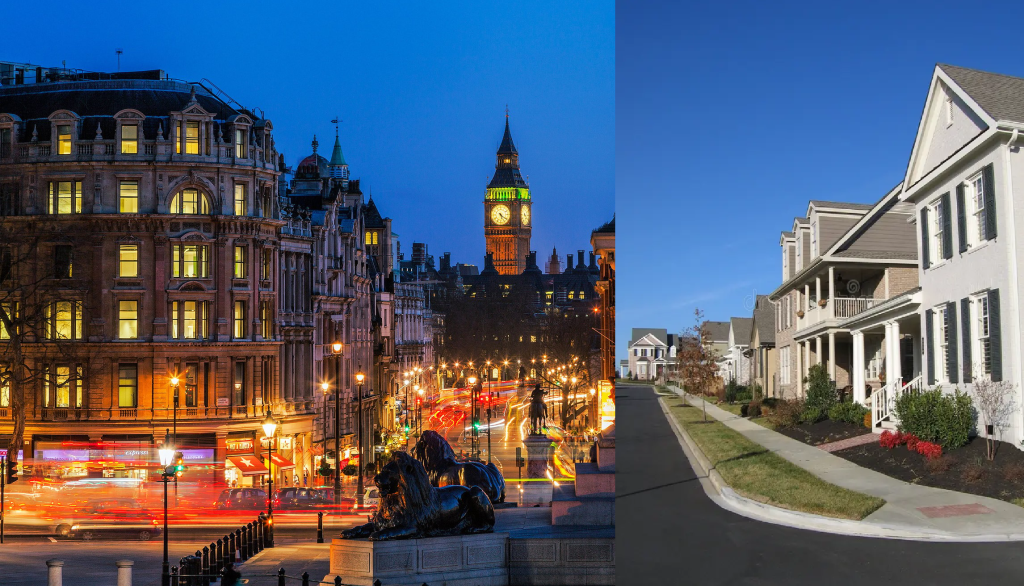
It’s been five years since I moved to the United Kingdom from the United States this month. I’m getting really close to finally being done with the immigration system here. I’ll apply for Indefinite Leave to Remain (ILR, essentially a British Green Card) and then immediately apply to naturalize as a British citizen. And all it took was 5+ years of my life and about £13,000 in application fees to the Home Office. Joy to the world.
I figured five years is enough time to really build up a deep understanding of the differences between the US and the UK. In this article, I’m going to explore some differences in everyday living between both places – some may be genuinely surprising to you regardless of whether you’re British, European, or American! Without further ado, here are 12 things that are mundane and commonplace at home, but luxuries across the pond for the other side!
6 Things That Are Commonplace in the UK, But Luxury in the US
1. Towel Radiators

A common theme you’ll see throughout these lists is how climate and weather affect a lot of things and shape everyday life. Houses in the UK (and in Europe), even new ones, are often still cooled in summer by breezes through an open window and heated in winter by what we Americans may consider to be ‘old-fashioned’ hot water radiators. The kind that “clink” away as hot water starts moving through them via central pipes from a boiler.
This means that almost every house has a central heating system that features a natural gas boiler, pipes, and radiators throughout the house. The boiler can be a tank system like many Americans are used to, or now more commonplace a “combi boiler” which quickly heats water on-demand rather than storing it for potential use. Thus, enter the “towel radiator.”
If you’re American, have you ever thought about warm towels as a rich people luxury thing? Well, pretty much every house in the UK has warm bath towels. Reason being, the bathrooms all have radiators in them for central heating! You can either drape your towel on a bog standard radiator, or more prevalent these days, you have a purpose-built towel radiator for the dual purpose of warming your bathroom in winter, but also warming and drying your towels. This is doubly important because the UK is a very damp country. Without a dehumidifier, your indoor ambient humidity can range from 60-90% – so your towels don’t dry easily.
We have a particularly “luxurious” towel radiator (we re-did our bathroom and kitchen recently, more on that in future articles). It is plugged into the central heat and fed with hot water when the house’s heat is on, but it also has an on-demand switch for electric heating for when we want warm towels but the central heat isn’t running. Can confirm, it is awesome. If you’re looking for something like this in your home, the key word you want to look for is “dual fuel” – here’s an example.
Why don’t Americans have this? Well, climate really. Old-fashioned radiator systems have almost entirely been replaced by HVAC. So you don’t have a ready-made system to piggy back off. Additionally, most places in North America are not as universally cold and damp as Britain – therefore, your towels hanging up tend to dry in between use. Therefore, any kind of towel-warming thing is strictly a luxury in the US.
2. Power Showers
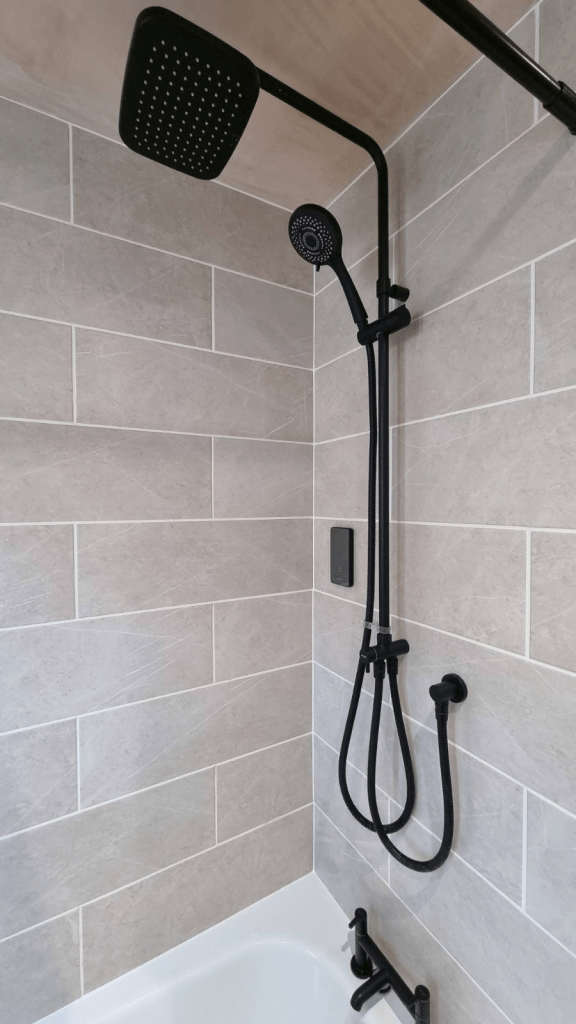
Keeping with the bathroom, another mundane UK item that is quite luxurious in the States is the power shower. If you’re American, do you ever find yourself endlessly waiting for your shower to warm up after you’ve turned it on? Well, in the UK, “turning on the shower” for many people is quite literal. You press a button and within a few seconds your shower is perfectly warm. The water pressure also tends to be better.
A power shower is an electrically powered unit that heats the incoming water to a set temperature. All you have to do is press one button and it does the rest. You can adjust the temperature and even the pressure on some models. This is ubiquitous in the UK as it’s generally cost effective to use electricity for this purpose – and, it’s just nice to have instant hot water compared to waiting ages and having to keep adjusting and testing the temperature until it’s just right.
I suspect, but don’t have the knowledge to definitively confirm, that this is almost entirely due to the fact the UK uses 230v and most houses are small. A power shower takes up only a small portion of the wall of your shower. It’s barely noticeable. Large tank systems aren’t terribly practical in most UK homes. The 230v electricity system also engages the heating element very quickly, thus giving near-instant hot water. Similar systems exist in the US (which runs on 110v), but these are rarer and more of a luxury item than standard. They tend to be expensive to buy, install, and run.
When redoing our bathroom, we considered several things. It’s one of two places in a house (the other being the kitchen) where you tend to get the full value of your renovations back as equity. You also only do bathroom or kitchen renovations once every 20-30 years. We thought, why not spend a few extra quid on a really, really cool power shower – which, we did. Our shower is programmable and has a touch screen interface inside the shower. We can set the temperature precisely (I like 39 C) and save the profiles. It also has a switch between a waterfall showerhead and a traditional one. Highly recommend something like this if you’re doing up your British bathroom!
3. In-Built, Sleek Kitchens
Americans, do you occasionally watch modern European crime dramas or other shows and go “damn, that’s a nice kitchen” – I’ve got news, if your kitchen has been done up at any time since the early 2000s, it almost certainly looks something like this:

British kitchens often incorporate the appliances into the furniture. Our dishwasher when closed looks like any other cabinet. We have German Neff appliances throughout the kitchen which are excellent quality, very much recommend if you’re in the UK. We’ve opted to have our fridge open to the kitchen so we can put magnets on it, but fridge-freezer units are usually also behind cabinetry. It’s sleek, clean, and efficient – a great way to use space and make it feel cleaner or bigger while also looking good. In-built lighting is also common. In my experience, these things are sort of standard in modern British kitchens, but are quite luxurious to most Americans.
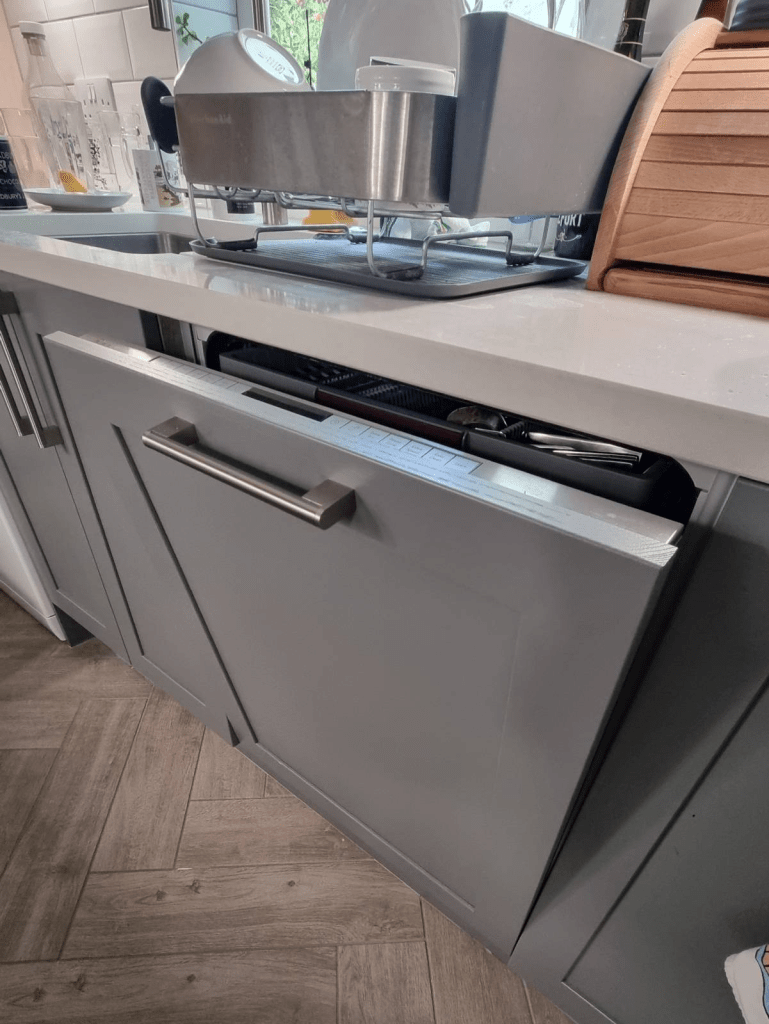
The key reason for the difference is again, space constraints. British kitchens attempt to maximize use of space because they are in smaller houses that tend to not be open plan. An integrated kitchen allows for having all of the appliances includes without feeling or looking cramped. American homes are much bigger, which allows for free-standing appliances and furniture, which especially looks good in open-plan spaces. That’s my theory anyway!
4. Kettles That Actually Work
I’m with the Brits on this one, British kettles are great and American ones suck. This again is almost entirely down to the 110v vs 230v electric systems. The British 230v simply puts more juice into the heating element and thus heats water much faster. Simple as.

But, here are all the things Americans would never think about British kettles. Firstly, they boil water much faster and more efficiently than stove tops. Americans, do you ever find yourself waiting forever for a pot of water to boil before you put your pasta in? Well, here in Britain we first put the pasta in a pot on the stove, then we heat the water quickly in the kettle, pour it into the pot with pasta already in, then light/start the stove and voila, boiling pasta within like 3 minutes. It’s genius.
Europe also has much better instant coffee than the States. I actually drink it most mornings due to time constraints. Nothing beats a fresh ground pour-over, but sometimes I want coffee within 60 seconds of entering my kitchen. The kettle gets the job done. I think last time I was in the States I measured the time it took a posh American kettle (with a digital temp readout) to get from cold to 95 C and it was 8 minutes! My British kettle gives me a 95 C water pour for my coffee in about 2 minutes or less. Truly, a wonderful everyday luxury many Brits take for granted.
5. Walkable Cities with Green Spaces
You’ve probably heard this one before, but it is a valid point: British cities and towns are older, and the streets were laid out pre-car. They’re just organically more pedestrian and horse cart oriented and you can get places easily on foot. There are notable exceptions to this as newer built areas are very car-centric. However, the truth remains that you’re on average more likely to live somewhere with public parks, play areas, and shops all within close proximity if you’re in the UK.
From our house, we have several pubs, a sandwich shop, a breakfast cafe (think greasy spoon cheap, but good eggs and sausages type thing), a tailor, a chippy, a park with children’s playground, a train station, our voting poling place, a corner shop grocery store, etc. etc. all within a 10-minute walk. I use our car to go to specific stores on the edge of the city, visiting family far away, and to work once or twice per week. That’s it. It’s an active and charming way to live.
Compare this to the post-war “economic car miracle” of development in the States, which has resulted in the “Stroad” being the default place across the majority of North America. Compact, single-use zoning where a car is the only safe and reasonable way to get between things.

6. Pub Culture and Relaxed Drinking
Let’s be honest, drinking culture in the US sucks. Teenagers learn to binge drink in secret before they’re 21, leading to a very high energy, manic style of bar and party culture later in life. Don’t get me wrong, football hooliganism and pubs lead to excessive drinking and violence in the UK, but there’s an entire other side to alcohol in Europe that is very pleasant, relaxed, and safe.
In the US, you can drink outdoors outside designated areas in very few places. Open container laws apply equally between vehicle interiors and public places (for the Brits, this means if you crack open a can of beer on the pavement, you’re committing a crime, even if you’re not consuming it. It can be quite strictly enforced in some places).
If you want to drink at an outdoor concert, events, etc. you may have to do it in secret. You’ll need to smuggle in your booze and disguise it, because at best you’ll be violating private property terms and conditions and at worst committing a crime. And, just like teenage binge drinking, you’ll want to maximize the effect of the alcohol to compensate for the risk you’re taking, leading to perhaps more drunkenness than you would want if it were fully open and allowed. That’s my theory anyway.
A lot of this is leftover uptightness from the Temprance Movement. If you’re British you may not know, but alcohol was banned by Constitutional amendment in the 1920s in the US. Alcohol was as illegal as cocaine. Prior to the ban, American drinking consumption, especially among men, was extreme. You can look up charts online comparing the per capita alcohol consumption between the US and Europe before and after the Temprance Movement and it’s pretty extreme. The US has never recovered the lead. The US has a lot of cultural hangovers from this period. You have lots of restrictions that were put in place after re-legalization that are simply still in place. Google “dry county” for a look into this.
Contrast this with the UK and Europe in general. You want to have a drink in the nice park down the street? Go for it. You and your mates fancy a cold one or two while fishing? Yep, all good. You want a pint with your lunch without being judged? Go right ahead, basically everyone else is doing it too. You can drink at county fairs, festivals, on the street, at the park, outside pubs, inside pubs, you name it. There’s very few places you aren’t able to enjoy liberal, laid back European drinking culture.

Pubs are a cornerstone of British culture, and for the most part they’re great. Cozy atmosphere with your neighbors and friends, decent hearty meals that don’t overload your plate. Good ales on draught. Really excellent and unique to Britain. There’s something very special about quietly enjoying a good pint on a bright, summer day.
6 Things That Are Commonplace in the US, But Luxury in the UK
1. HVAC
HVAC exists in the UK, but it’s mostly in commercial buildings, almost never (and I truly mean never) in residential buildings. For those that don’t know, HVAC stands for Heating, Ventilation, and Air Conditioning. If you’re British and you’ve seen American movies where people climb through ductwork when they’re being sneaky, that’s part of HVAC (though crawling through these isn’t actually possible, that’s just Hollywood).
HVAC is beneficial because it not only provides heating and cooling, but it also filters the air and provides air movement. This is something the Victorians knew a lot about, the health of a house requiring the movement of fresh air. Long story short, it helps with removing moisture and with pathogens. A still house is an unhealthy house. An HVAC system accomplishes the same thing an open window on a nice day does.
HVAC is ubiquitous in the US, and again, it’s mostly to do with historical climate. North America on average has hot, humid summers and cold winters. The benefits of HVAC are being able to keep your home/building interior at a constant 20 C while also providing airflow and filtration. One huge benefit I’ve found (and miss) about HVAC is you have to dust far less often in the US, and when you do dust, it isn’t in huge volumes. In the UK, it feels like you have to constantly dust things because you can’t have your windows open all the time. Still air leads to lots more dust.

Believe it or not, despite climate change, most British homes are still able to keep ambient temperatures between 16-24 C all year round. While I’d love the benefits of an HVAC system, like the examples in the first section, there’s historical and environmental reasons why it isn’t ubiquitous and would be, in fact, a luxury here in the UK. We don’t live in London, but I hear HVAC businesses are expanding around there due to rich Brits beginning to add it to their homes, thanks to rising temperatures in the summers. For us, we have a portable AC unit that provides us with some relief when temperatures get too high in our house in the summer, which despite protestations from the Brits, in my opinion the frequency of high heat days requiring AC is going up.
2. 24/7 Stores, Maximized Convenience
American and British shopping are superficially similar. Britain has shopping centers (retail parks or trading estates in their parlance), but they aren’t quite the same in terms of scale and ubiquity. The other thing is that British establishments keep what Americans might call, more “traditional” hours of operation. It’s very likely the place you need things from is open only from 9 or 10 am until 6 or 8 pm on weekdays and even less availability on weekends.

Grocery stores have trading hours on Sundays limited by law. Most grocery places are open from 10 am until 4 pm. There are some grocery stores that will have a “browsing time” where they open an hour earlier, but the tills (cash registers) are closed for that first hour, so you can only wander around and put things in your trolley (cart)! It’s bonkers, but I suppose it’s nice for the employees to have time for themselves and their families on Sunday. The only truly 24/7 establishments I know of in Britain are the occasional McDonalds, some (but nowhere near all) petrol stations, and the bathroom facilities at rest stops (services).
Not so in the United States of America! Walmart, 24 hours! Target? It has everything you needed in a single store, groceries, home goods, clothing, toys, everything! 7-11? More like, literally open forever eleven. You want a hot dog, a pack of cigarettes, and an energy drink at 3 am? You’re only ever a 10-minute drive away at most!
3. Customer Service (Especially the Trades)
Admittedly, this one probably bothers me the most of anything. I used to work in the construction industry in the States (selling project software to construction companies). It’s been a constant conversation for almost 20 years that good labor is hard to come by now as no one is interested in working in the trades. The same is true in the UK.
The thing that I really miss about the US is how responsive companies are to your needs when you’re a paying customer. Money may not buy you happiness, but in America it can buy you solutions to problems. In the UK, I’ve found that even waving a fistful of cold hard cash at people isn’t enough motivation to get them to treat you well, do a quality job, and do it on time. Being brutally honest, I think it’s a combination of reasons: market scarcity, work-shyness, bad regulations, and a lack of competition.
The primary one is that there aren’t enough trades people to do all the jobs that need doing in aggregate across the country, so they have a constant inbound stream of work and no real need or reason to either do a great job nor to follow up on inbound requests – you’re just one of a dozen new people that week asking for jobs done.
Secondarily, and this will be very controversial, I find the UK trades are generally much less professional, knowledgeable, certified, bonded, insured, etc. than their American counterparts. Maybe it’s just where I’m at (the magical place known as the Midlands) rather than London, but it seems like there’s a missing middle in the trades market. Where I’m from in Virginia, you have a healthy level of competition among firms that have about 30-50 employees and do something like $7 million in turnover per year. Those companies seem to be missing from the market in the UK. Here in England, you get your choice of multi-national civil engineering companies, or independent guys whose business is a mobile phone number and a van. Maybe they have an apprentice or two as helpers.
The only companies that might fall in that missing middle are the very expensive emergency call out companies. Even then, they’re not very responsive – they might be able to fit you in 72 hours after you’ve called them for a burst pipe. One of my formative experiences of being a new homeowner in the UK was having a kitchen leak the very moment we walked into our house for the first time. Here’s me thinking I’ll do a quick Google search, call up a well rated local plumbing company, and have them there within a few hours, a day at most. Record scratch and freeze frame on me frustratingly dialing an endless Google list of mobile phone numbers for individual plumbers desperately hoping one would call me back, pick up the phone, and just simply be interested in the job. After a few hours, I ended up lucking out and I got a really great local chap to come out and fix the issue for me within 24 hours. He’s great, and no you can’t have his name or number. Brits (and me!) tend to safeguard a good tradesperson’s contact info for themselves due to how rare it is to find a good, trustworthy one!
As my British wife says, everyone wants the laid-back island life culture up until the point you actually need something fixed or taken care of. You’ll probably note the contradiction above where I talk about speed in the US, but I ultimately got the same thing in the UK with a local plumber who did a good job within 24 hours. The difference is effort and sheer will. It took a considerable amount of time to get a good plumber out quickly. Also luck. We’ve had bad luck with other jobs, all related to the above.
Life in the UK is just a bit slower and less convenient, but that’s okay. The tradeoff is that regular frontline employees in Britain aren’t as constantly stressed, underpaid, and abused as they are in the US. The dark side of convenience and speed is found in extreme entitlement, belittlement, and holding powerless employees to account through abuse for things outside their control.
4. Closets, Storage, and General Space in Homes
One of the things that makes people laugh when I discuss the differences between the US and UK is how different our houses are. The frequent comment from British visitors to our UK home is “how big your house is!” – where I sheepishly either agree with them, or depending on who it is, I’ll point out our house feels like an average size to me. The other one that blows minds is that in many places in the US, you can’t legally call something a bedroom unless it has an exterior window and a closet.
When I first moved here, I was constantly stubbing my toe and running into things because everything was just that bit more closed off, close together, and small inside a home. You get used to it after a while.
While British new build homes are shocking in their quality in the same way American new construction is, they also happen to be small and cramped compared to American houses. Even solid, older houses are smaller even when compared to many places in mainland Europe. This is partially cultural choice, part necessity. Much of the housing stock in good, walkable places pre-date cars, so the smaller and closer together the homes, the less distance a greater number of people need to travel. Britain has such a shortage of houses, and regulation of new build estates is lacking, so you get a profit driven maximization of space (ie put as many new houses in this field as you can) that isn’t culturally questioned. So you get a supreme lack of space, and therefore a lack of bonus areas in houses – such as storage.

American homes have closets in every bedroom, closets in hallways, pantries in kitchens for storage, more cabinets, large attics, basements, and huge garages – all places to squirrel your stuff away out of sight. We are very fortunate to have three closets in our house, which is a very rare thing! We also have a cellar, but because it’s Victorian brick and open to the outside, it’s more like a Midwest pit crawl space than a basement. We have constantly struggled for Storage space in a way I never did back in the States. The British solutions are to either commission the building of expensive inbuilt wardrobes, putting multiple wardrobes in rooms, building shelves in whatever space you can find, or simply buying plastic bins and shoving them in a corner.
5. The Americans With Disabilities Act (ADA)
My grandfather was a combat disabled veteran. I don’t think I really appreciated the ADA and what it’s done for American society until I encountered infrastructure in the UK. While my grandfather is no longer with us, I do think from time to time about how much more difficult being disabled in the UK must be. I really do think the ADA is one of the greatest legislative achievements of the United States in the last century – it is a triumph of good policy, making society as whole better without much downside impact. Because of the ADA, my grandfather would be able to go to any location with guaranteed parking near an entrance, with sidewalks all the way to the front. This simple piece of legislation made society more accessible, to a degree that no pre-planning was ever required before deciding to go somewhere.

When we first moved to the UK, I think my pre-conceived notion of the UK being more regulated, and farther along socially than the US was totally upended by the lack of an ADA equivalent, at least here in England. Accessibility is mandated in some instances, but it is nowhere as universal or enforced.
For example, the building where our first flat was located was built around 2000. To get to our flat, you had to navigate a gauntlet of closed fire doors with no automatic open feature for the handicapped. The lift was too small to fit a wheelchair and another person inside. There are no braille signs. After exiting the lift, you had to navigate a 90-degree sallyport with heavy firedoors on either side. And then, you had to descend three steps on corrugated walkway steel to get to the level our flat was on. Simply put, the building would be challenging if not impossible for a handicapped person to live it. This is just one building, but this type of lack of accessibility planning is found absolutely everywhere. In some cases it’s understandable due to age of buildings or infrastructure, but in other cases it is shocking to see in new buildings and spaces. I really feel sorry for anyone who relies on accessibility in the UK.
Americans, thank your lucky stars the ADA exists. If not for yourself (you may end up handicapped yourself someday) or your family, you are likely at least 2 degrees of separation from someone who has disability needs provided for by the ADA. I really do think the UK could learn from this style of positive regulation and I remain an active supporter of accessibility.
6. Quick, Well-Regulated, Professional Real Estate Transactions
Boy howdy, real estate in England sucks, and the English know it. We all hate it, even the professionals in the process hate it. Scotland and Northern Ireland have their own systems, so this is just about England and Wales (the Scots will yell at me if I don’t point that out). So here are some major differences between England and the US:
- In England, anyone can call themselves an estate agent. There are shockingly few regulations that protect customers from estate agent incompetence. I could set up a shop tomorrow as an estate agent as long as I was registered with the Property Ombudsman and had client money protection insurance if I was going to handle cash as a middleman. That’s it!
- Additionally, you as a buyer are on your own, you often are not represented by an agent. In fact, the seller’s estate agent will often act as if they are there to help you as the buyer, which in my opinion is a huge conflict of interest problem but hey ho, that’s just how it is. In fact, for our own house, our seller’s estate agent almost had the same law firm representing us and the seller at the same time! I had to point out it was a clear conflict of interest and we had to find a different law firm to handle our side of the transaction.
- Offers aren’t binding! If you make an offer, that isn’t binding and a seller accepting your offer also isn’t binding. You don’t have a bona fide contract until the “exchange of contracts” happens, which is typically only a day or two before the transaction actually happens and you get the house.
- Because offers aren’t binding, you have a practice called Gazumping in England – this is where a seller will accept your offer, but if they receive a better offer in the time between your offer was accepted and the exchange of contracts, the seller can kick you to the curb and go with the better offer. Totally legal, though it is generally frowned upon as greedy and uncouth. It does happen often though, unfortunately.
- The concept of the Onward Chain – oh the onward chain! Because offers aren’t binding, and accepted offers aren’t contracts, you get situations where the seller won’t want to actually ‘do’ the transaction until they have found their next home. But then you have the same thing with that onward transaction. Rinse and repeat until there’s either a cash buyer who doesn’t need to move house, a new build house, or other such situations. You can have a chain of like, 15 people all looking to have the assurance they have somewhere guaranteed to move to when they are finally under contract to sell their own home. What happens is the estate agents and the conveyancers (the lawyers handling the actual contract stuff) all coordinate in a Mexican standoff to align a date where everyone is happy, and then there’s a “ready set go!” frantic mass exchange of contracts. If this sounds ridiculous and silly, that’s because it is.
- You become legally liable for the house once the contracts have been exchanged, even though in all likelihood the people selling to you are still living there. Yes, that’s right, you have to have homeowner’s insurance on the house even though you don’t actually own it yet! It’s typically only a period of a few weeks at most, but I still found that to be absolutely insane.
- Stamp Duty – I don’t mind this one so much, but it is different and can be confusing how much you’ll actually owe as it’s pretty opaque and hard to research about a specific house beforehand. This is a value tax the central government changes and collects with every real estate transaction. The tradeoff is that council tax is often less expensive that American property tax in most suburban jurisdictions.
In America, real estate transactions are standardized, heavily regulated in an intelligent way, and quick. It’s possible, perhaps even common, to put an offer on a house and then be moving in within 30 days provided no surprises or problems arise in the transaction. Key differences are:

- Real estate agents are licensed to standards set by the government and the industry together.
- Real estate agents independently represent buyers too and are experts on the process. They can clearly explain what’s needed, by what date, and why for almost everything. There are often two real estate agents in a transaction, a buyer and a seller representative negotiating against one another – each only has a fiduciary responsibility to one party in the transaction. From the perspective of each party, the real estate agent does all the work for you. All you need to do is answer their questions about things and maybe make some phone calls to your lender or property inspector.
- Offers are themselves binding and accepting an offer for your home forms a contract to buy. There are often contingencies that allow either party to back out before closing (conveyance). Standard ones are satisfactory home inspection, inspection of the deeds and covenants, etc. Gazumping as a practice is extremely rare in the US.
- Once the sale is agreed, no one cares (pretty much neither seller nor buyer) whether the home seller has another place lined up. It’s your responsibility as seller to vacate the property by the agreed closing date. Often if something happens and the seller doesn’t have another place lined up, there’s an informal system of allowing the seller some grace period time to get things together. It might be a nominal fee, full blown rent, or for free out of the goodness of people’s hearts, but it’s not commonplace for this to happen and it is informal. Speed in the system often means sellers also find and close on a house independently within the 30-day timeframe.
Conclusion
After 5 years of living in the UK, I’ve had plenty of time to notice many of the things that make life different between here and the US. Some are just cultural quirks, others are deeply ingrained structural differences, and a few still leave me shaking my head. Neither country gets everything right and I find frustrations and admiration come in equal amounts. There’s a lot I like about living in the UK, there’s stuff I don’t miss about the US, and vice versa.
At the end of the day, life is just a series of trade-offs. The speed, convenience, and customer focus I miss from America can come with its own cost, just as the slower, more measured pace of the UK can be both charming and infuriating. Moving abroad really makes you realize what you once took for granted, and what you have gained. That’s all part of the fun. What do you think? If you’ve lived in both places, what’s jumped out to you the most? Let me know in the comments below!
This article contains promotional links that compensate Scott if you sign up for a plan or make a purchase. I’ve not been contacted or solicited by any of these providers to promote their services; I’m just a big fan of their companies and products – and I’m a daily user. Thank you for your support, it helps me pay the bills!
All images in this article are either sourced from Wikimedia Commons and used under applicable license or are my own photos. All rights reserved where applicable and my photos may not be used without my written permission.
 Scott In Britain